


This is the third annual Experimental History Blog Post Competition, Extravaganza, and Jamboree, where people send me their best new blog posts and I reward my favorites with praise and cash.
This year, I got 68 submissions from folks all over the world, including visual artists, consultants, high schoolers, economists, engineers, lawyers, and all sorts of pseudonymous internet weirdos.
For the first time, I ran all potential winners through Pangram, which is an AI-writing detector.1 So according to the machine (and to my ear), all of the winners are 100% human-written. And here they are:
FIRST PLACE ($500): How to Survive Boiling Water by Jane A. Cook
In the blogging biz, when someone dares to actually work on a piece of writing before they publish it—when they bother to cite their sources, check their facts, find a good story to frame their argument, etc.—we call that an “effort post”.
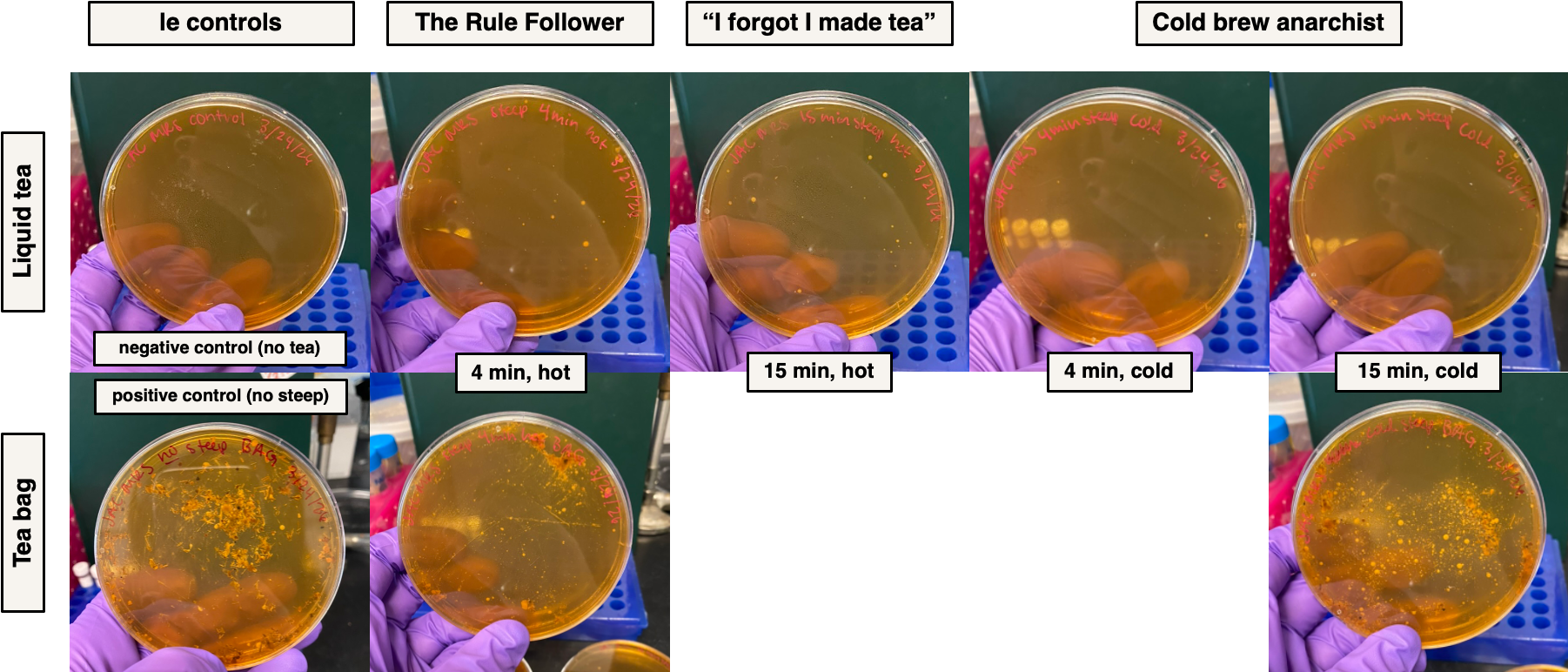
“How to Survive Boiling Water” is a quintessential effort post. Cook accidentally drinks some probiotic tea, and then she’s like, wait, how could “probiotic tea” possibly be a thing? Don’t all the bacteria die when they get dunked in boiling water? This is where most blog posts would end. Instead, Cook decides to run an elaborate experiment involving, among other things, a makeshift Bunsen burner, molten agar, and a dash of polymerase chain reaction. Ultimately, she discovers that bacteria are freaky little creatures that are capable of all kinds of depravity.
Bio:
Jane Cook is a PhD candidate and a microbiologist at large.
SECOND PLACE ($250): Magical Constitutionalism by Ricardo López Cordero
“As far as I can tell,” begins López Cordero’s piece, “the word ‘vape’ appears in only one national constitution on Earth.”
There’s an art to the short blog post like this, the kind that drops something interesting your lap, gives you a nod, and walks away. So in describing his post, I’ll do the same.
Bio: Ricardo López Cordero is “a writer and producer from Mexico City”.
THIRD PLACE ($100): Remembering Indonesia from My Grandpa by Melanie Hsieh
“Young person discovers their roots” is a tried-and-true format. What stands out about Hsieh’s version is that her roots occupy such a unique spot in history: her grandparents were Chinese born in Indonesia, which means they got caught between the rock of the Cultural Revolution and the hard place of anti-communist backlash.
A Mi [Hsieh’s grandfather’s classmate] told me about the first weeks: propaganda posters appearing on walls overnight, enormous red characters, and then the label fandong (反動), reactionary. For overseas Chinese who had grown up in capitalist Southeast Asia, the label followed them everywhere.
[...] I think about how differently we use the word uncertainty now. I say it about job markets, AI, whether to stay in one city or move to another. She meant: I did not know if I would be allowed to continue learning. I did not know if I would be allowed to leave. I did not know who I was allowed to become.
Bio:
I write in search of clarity
HONORABLE MENTIONS
A Man I Apparently Made Out With Heard Me on a Podcast by Sadie Dingfelder
Dingfelder has extremely sparse autobiographical memories, which means, on occasion, people remind her that she has made out with them:
This feels mean to say, but it’s true: I have absolutely no memory of this makeout session, or Mark’s entire existence, for that matter.
Fish farts, dead elephants, and total institutions in wildlife conservation by Arjun Kamdar
Kamdar is a conservationist, and he finds that regular people generally figure out reasonable ways of dealing with the wildlife they encounter. “Total institutions” like the army, on the other hand, try to deal with animals in ways that are totally bananas. For example:
The armed forces of Sweden, for over a decade in the 1980s were bombing the living daylights out of their coasts because they were certain that what they heard through their acoustic sensors in the water were Soviet submarines. [...] [Much later,] the Swedish armed forces approached ecologists working on marine sounds. They quickly figured out that these sounds were only shoals of the herring fish releasing gas from their butts.
Chatting Alone by Alex Martsinovich
Martsinovich argues, via code snippets, that there is no such thing as a “conversation” with a chatbot. The AI is born anew every time it speaks, and it simply reads the dialogue so far and then tries to write the next line:
ChatGPT may look like a chat, but there is no single entity on the other side. If anything, it’s more akin to speed dating, where you get a new partner for every phrase you say. The other side receives a full transcript and does their best to role-play a coherent conversation. They are all excellent actors, and you’re having a great time, but in the end you will go home alone and nobody will know your name.
Toilets as a religious experience by Alex Rinehart
People say that reading introduces you to places and people you’d never meet otherwise. This is especially true about reading blog posts. In this case, allow me to introduce you to someone who will do whatever it takes to avoid using a toilet that flushes automatically:
I was 5 years old, starting kindergarten, and using the toilet in the bathroom attached to our classroom. I finished my business, reached for the toilet paper and FA-WHOOM, a tsunami exploded beneath my exposed bottom. A fear was planted that day, one that has blossomed and sprouted since. I don’t truck with automatic toilets. [...] I can count on one hand the number of times I’ve used one in the last ten years.
YEEHAW
And with that, I hereby call to a close the 2026 Experimental History Blog Post Competition, Extravaganza, and Jamboree. Thanks to everyone who submitted, thanks to all of you for reading, and thanks to the paid subscribers who make both this blog and this jamboree possible. Because of you, the jamboree continues eternally in our hearts.
There is no perfect detector for AI writing. Freddie de Boer has a post showing how easy it is to get Pangram to say that a piece of writing is “100% human” or “100% AI”. But given the recent Commonwealth Prize debacle, I think competitions that intend to reward humans should at least try to make sure that they aren’t rewarding machines instead.
Blog jamborees are one of the few formats that actually surface writers nobody has heard of yet. The institutional algorithms keep recycling the same top twenty. Glad someone is still doing the curation work.
> Martsinovich argues, via code snippets, that there is no such thing as a “conversation” with a chatbot. The AI is born anew every time it speaks, and it simply reads the dialogue so far and then tries to write the next line.
Actually, this understates things. Every time an LLM adds a new output token to a conversation, it needs to reread every prior word in the conversation. In other words, every word that an LLM generates is produced by an isolated process; it's born anew every time it needs to choose the next word. Every output token that it adds to the conversation could be generated by a completely separate server in a different part of the world, and you would have no idea. (The term for a system that works like this is a Markov process. Also, to get really technical, there is some caching of intermediate calculations done between output token generations, but it's not necessary at all.)
The idea that LLMs are more like industrial processes than people is one of the things I tried to get at in my submission, but I admit that at this point, I have no idea what the state of "common knowledge" around LLMs is, and thus what the starting point for talking about this kind of thing should be. It's definitely one of those topics that's new enough that everyone approaches it with different prior knowledge and also different intuitive understanding and reactions, which makes it both easy to write about (because there's a lot of room for new takes) and hard to write about (because any given reader might have a very different baseline understanding or opinions than you.) (I'm probably going to restructure my submission quite a bit before posting it publicly...)