

Underrated Ways to Change the World is one of my most-read posts of all time, I think because people see the state of the world and they’re like, “Oh no, someone should do something about this!” and then they’re like “But what should I do about this?” Every problem seems so impossibly large and complicated, where do you even start?
You start by realizing that nobody can clean up this mess single-handedly, which is fine, because we’ve got roughly 16 billion other hands at the ready. All any of us have to do is find some neglected corner and start scrubbing.
That’s why I take note whenever I spot someone who seems uncommonly clever at making things better, or whenever I trip over a problem that doesn’t seem to have anyone fixing it. I present them to you here in the hopes that they’ll inspire you as they’ve inspired me.
1. ANSWER AN IMPORTANT BUT UNSEXY QUESTION
According to this terrific profile, Donald Shoup “has a strong claim on being the scholar who will have had the greatest impact on your day-to-day life”. Shoup did not study cancer, nuclear physics, or AI. No, Shoup studied parking. He spent his whole career documenting the fact that “free” parking ultimately backfires, and it’s better to charge for parking instead and use the revenues to make neighborhoods nicer: plant trees, spruce up the parks, keep the sidewalks clean.1
Shoup’s ideas have been adopted all over the world, with heartening results. When you price parking appropriately, traffic goes down, fewer people get tickets, and you know there’s going to be a space waiting for you when you arrive.
Many so-called “thought leaders” strive for such an impact and never come close. What made Shoup so effective? Three things, says his student M. Nolan Gray:
He picked an unsexy topic where low-hanging fruit was just waiting to be picked.
He made his ideas palatable to all sorts of politics, explaining to conservatives, libertarians, progressives, and socialists how pay-for-parking regimes fit into each of their ideologies.2
He maintained strict message discipline. When asked about the Israel-Palestine protests on campus, he reportedly responded, “I’m just wondering where they all parked”.
So the next time you find a convenient parking spot, thank Shoup, and the next time you want to apply your wits to improving the world, be Shoup.
2. BE A PUBLIC CHARACTER
Jane Jacobs, the great urban theorist, once wrote that the health of a neighborhood depends on its “public characters”.3 For instance, two public characters in Jacobs’ neighborhood are Mr. and Mrs. Jaffe, who own a convenience store. On one winter morning, Jacobs observes the Jaffes provide the following services to the neighborhood, all free of charge:
supervised the small children crossing at the corner on the way to [school]
lent an umbrella to one customer and a dollar to another
took custody of a watch to give the repair man across the street when he opened later
gave out information on the range of rents in the neighborhood to an apartment seeker
listened to a tale of domestic difficulty and offered reassurance
told some rowdies they could not come in unless they behaved and then defined (and got) good behavior
provided an incidental forum for half a dozen conversations among customers who dropped in for oddments
set aside certain newly arrived papers and magazines for regular customers who would depend on getting them
advised a mother who came for a birthday present not to get the ship-model kit because another child going to the same birthday party was giving that
Some people think they can’t contribute to the world because they have no unique skills. How can you help if you don’t know kung fu or brain surgery? But as Jacobs writes, “A public character need have no special talents or wisdom to fulfill his function—although he often does. He just needs to be present [...] his main qualification is that he is public, that he talks to lots of different people.” Sometimes all we need is a warm body that is willing to be extra warm.
3. MAKE A SOCIAL NUCLEATION SITE
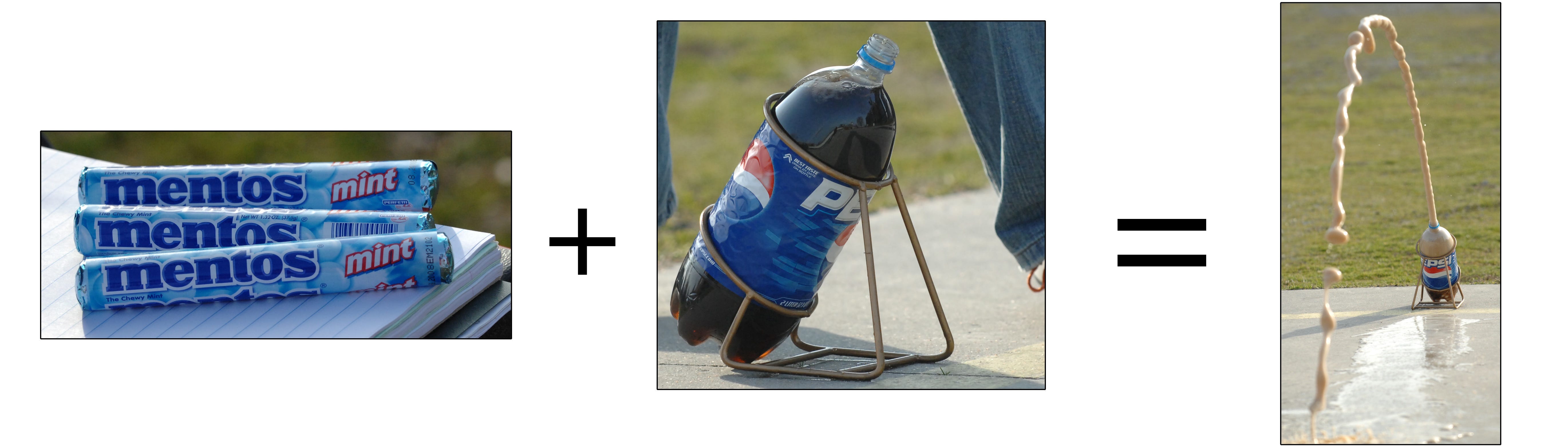
I once did a high school science fair experiment where I put Mentos in different carbonated beverages and measured the height of the resulting geysers. The scientific value of this project was, let’s say, limited, but I did learn something interesting: despite how it looks to the naked eye, bubbles don’t come from nowhere. They only form at nucleation sites—little pits and scratches where molecules can gather until they reach critical mass.
The same thing is true of human relationships. People are constantly crashing against each other in the great sea of humanity, but only under special conditions do they form the molecular bonds of friendship. As far as I can tell, these social nucleation sites only appear in the presence of what I would call unreasonable attentiveness.
For instance, my freshman year hallmates were uncommonly close because our resident advisor was uncommonly intense. Most other groups shuffle halfheartedly through the orientation day scavenger hunt; Kevin instructed us to show up in gym shorts and running shoes, and barked at us back and forth across campus as we attempted to locate the engineering library and the art museum. When we narrowly missed first place, he hounded the deans until they let us share in the coveted grand prize, a trip to Six Flags.
We bonded after that, not just because we had all gotten our brains rattled at the same frequency on the Superman rollercoaster, but because we could all share a knowing look with each other like, “This guy, right?” Kevin’s unreasonable attentiveness made our hallway A Thing. He created a furrow in the fabric of social space-time where a gaggle of 18-year-olds could glom together.
Being in the presence of unreasonable attentiveness isn’t always pleasant, but then, nucleation sites are technically imperfections. Bubbles don’t form in a perfectly smooth glass, and human groups don’t form in perfectly smooth experiences. Unreasonable attentiveness creates the slight unevenness that helps people realize they need something to hold onto—namely, each other.
4. SELL ONIONS ON THE INTERNET
Peter Askew didn’t intend to become an onion merchant. He just happened to be a compulsive buyer of domain names, and when he noticed that VidaliaOnions.com was up for sale, he snagged it. He then discovered that some people love Vidalia onions. Like, really love them:
During a phone order one season – 2018 I believe – a customer shared this story where he smuggled some Vidalias onto his vacation cruise ship, and during each meal, would instruct the server to ‘take this onion to the back, chop it up, and add it onto my salad.’
But these allium aficionados didn’t have a good way to get in-season onions because Vidalias can only be grown in Georgia, and it’s a pain for small farms to maintain a direct-to-consumer shipping business on the side. Enter Askew, who now makes a living by pleasing the Vidalia-heads:
Last season, while I called a gentleman back regarding a phone order, his wife answered. While I introduced myself, she interrupted me mid-sentence and hollered in exaltation to her husband: “THE VIDALIA MAN! THE VIDALIA MAN! PICK UP THE PHONE!”
People have polarized views of business these days. Some people think we should feed grandma to the economy so it can grow bigger, while other people think we should gun down CEOs in the street. VidaliaOnions.com is, I think, a nice middle ground: you find a thing people want, you give it to them, you pocket some profit. So if you want an honest day’s work, maybe figure out what else people want chopped up and put on their cruise ship salads.

5. BE AN HONEST BROKER IN AN OTHERWISE SKEEVY INDUSTRY
I know a handful of people who have needed immigration lawyers, and they all say the same thing: there are no good immigration lawyers.
I think this is because the most prosocially-minded lawyers become public defenders or work at nonprofits representing cash-strapped clients, while the most capable and amoral lawyers go to white-shoe firms where they can make beaucoup bucks representing celebrity murderers and Halliburton. This leaves a doughnut hole for people who aren’t indigent, but also aren’t Intel. So if you want to help people, but you also don’t want to make peanuts, you could do a lot of good by being an honest and competent immigration lawyer.
I think there are lots of jobs like that, roles that don’t get good people because they aren’t sacrificial enough to attract the do-gooders and they aren’t lucrative enough to attract the overachievers. Home repair, movers, daycares, nursing homes, local news, city government—these are places where honesty and talent can matter a lot, but supply is low.
So if your career offers you the choice of being a starving saint or a wealthy sinner, consider being a middle-class mensch instead. You may not be helping the absolute neediest people, and you may not be able to afford a yacht, but there are lots of folks out there who would really like some help getting their visas renewed, and they’d be very happy to meet you.
6. IMPROVE A STATISTIC
I have this game I like to play called Viral Statistics Bingo, where you find statistics that have gone viral on the internet and you try to trace them back to their original source. You’ll usually find that they have one of five dubious origins:
A crummy study done in like 1904
A study that was done on mice
A book that’s out of print and now no one can find it
A complete misinterpretation of the data
It’s just something some guy said once
That means anyone with sufficient motivation can render a public service by improving the precision of a famous number. For example, the sex worker/data scientist Aella realized that no one has any idea what percentage of sex workers are victims of human trafficking. By combining her own surveys with re-analysis of publicly available data, she estimates that it’s 3.2%. That number is probably not exactly right, but then, no statistic is exactly right—the point is that it puts us in the right ballpark, that you can check her work for yourself, and that it’s a lot better than basing our numbers on a study done in mice.
7. BE A HOBBIT
The US does a bad job regulating clinical trials, and it means we don’t invent as many life-saving medicines as we could. Ruxandra Teslo is trying to change that, and she says that scientists and doctors often give her damning information that would be very helpful for her reform efforts. But her sources refuse to go on the record because it might put their careers in a bit of jeopardy. Not real jeopardy, mind you, like if you drive your minivan into the dean’s office or if you pants the director of the NIH. We’re talking mild jeopardy, like you might be 5% less likely to win your next grant.
She refers to this as “hobbitian courage”, as in, not the kind of courage required to meet an army of Orcs on the battlefield, but the courage required to take a piece of jewelry on a field trip to a volcano:
The quieter, hobbitian form of courage that clinical development reform (or any other hard systems problem) requires is humble: a researcher agreeing to let you cite them, an administrator willing to deviate from an inherited checklist, a policymaker ready to question a default.
It’s understandable that most people don’t want to risk their lives or blow up their careers to save the world. But most situations don’t actually call for the ultimate sacrifice. So if you’re not willing to fall on your sword, consider: would you fall on a thumbtack instead?

8. MAKE YOUR DAMN SYSTEM WORK
Every human lives part-time in a Kafka novel. In between working, eating, and sleeping, you must also navigate the terrors of various bureaucracies that can do whatever they want to you with basically no consequences.
For example, if you have the audacity to go to a hospital in the US, you will receive mysterious bills for months afterwards (“You owe us $450 because you went #2 in an out-of-network commode”). If you work at a university, you have to wait weeks for an Institutional Review Board to tell you whether it’s okay to ask people how much they like Pop-Tarts. The IRS knows how much you owe in taxes, but instead of telling you, you’re supposed to guess, and if you guess wrong, you owe them additional money—it’s like playing the world’s worst game show, and the host also has a monopoly on the legitimate means of violence.
If you can de-gum the gears of one of these systems—even a sub-sub-sub-system!—you could improve the lives of millions of people. To pick a totally random example, if you work for the Department of Finance for the City of Chicago, and somebody is like “Hey, this very nice blogger just moved to town and he didn’t know that you have to get a sticker from us in order to have a vehicle inside city limits, let’s charge him a $200 fine!”, you could say in reply, “What if we didn’t do that? What if we asked him to get the sticker instead, and only fined him if he didn’t follow through? Because seriously, how are people supposed to know about this sticker system? When you move to Chicago, does the ghostly form of JB Pritzker appear to you in a dream and explain that you need both a sticker from the state of Illinois, which goes on the license plate, and a sticker from the city of Chicago, which goes on your windshield? Do we serve the people, or do we terrorize them?” Just as one example.
.jpg)
9. BE GOOD AUDIENCE
I used to perform at a weekly standup gig when I lived in the UK, and this guy Wally would always be there in the second row. I got the impression that he didn’t have anywhere else to be, but we didn’t mind, because Wally was Good Audience.
When the jokes were good, he laughed loud and hard, and when the jokes were bad, he politely waited for more good jokes. Wally brought his friends, they brought their friends, and having more Good Audience made the acts better, too. (When comedians only perform for each other, no one laughs.) Eventually the gig got big, so big that it would sell out every week, and we’d have to set aside a ticket for Wally or else he wouldn’t get in. Ten years later, that show is still running.
Fran Leibowitz once said that the AIDS epidemic wiped out not just a generation of artists, but also a generation of audience. Great writers, performers, filmmakers, etc. cannot exist without great readers, watchers, and commentators—and not just because they open their wallets and put butts in seats, but because they pluck the diamonds out of the rough, they show it to their friends and pass it on to their kids, they raise it above their heads while wading through the sea of slop, shouting, “This! Look at this!”
10. ACQUAINT YOURSELF
Years ago, my friend Drew was visiting me when we noticed a whiff of natural gas in the hallway outside my apartment. I thought it was nothing—my building wasn’t the nicest, and it often smelled of many things—but Drew, who is twice as affable and Midwestern as I am, insisted we call the gas company. A bored technician arrived and halfheartedly waved his gas-detecting wand around my neighbor’s door, at which point his eyes got wide. He rushed to the basement, where he saw the gas meter spinning wildly, meaning that gas was pouring into my neighbor’s apartment.
“We gotta get this door open,” he said.
No one answered when we pounded on the door, so we summoned the fire department, who busted open a window and found my neighbor unconscious on the floor. His stove’s burners was on, but not lit, turning his apartment into a gas chamber. They told us the guy probably would have died if someone didn’t call, and the building might have caught on fire.
I was glad the guy survived, but I was ashamed that he had to be saved by a total stranger, while his own neighbor was ready to walk on by. I should have known him! I should have brought him Christmas cookies! We should have played checkers in the park on Saturdays! In the days afterward, I fantasized about knocking on his door or leaving him a note, like, “Hey! I notice you are elderly and alone, and I am young and nearby, maybe we should get a Tuesdays with Morrie thing going?”
But I never did that. I was too intimidated. Besides, am I supposed to become bosom buddies with every schmuck who lives in my building? Who’s got time for that?
Now that I’ve lived among many schmucks in many different buildings, I realized that I didn’t need to be this guy’s best friend. I just needed to be his acquaintance. If I knew his name, if I had even spoken to him once in the hallway, then when I got a noseful of gas outside his door, I would have thought to myself, “Oh, Rob’s apartment shouldn’t smell like that.” Rob ‘n’ me were never going to be Mitch and Morrie, but we could have easily been Guys Who Kind of Recognize Each Other and Would Be Willing to Report the Presence of Dangerous Chemicals on Each Other’s Behalf.
DEATH STAR SUPERSTARS
A lot of well-intentioned people suffer from what we might call Superhero Syndrome: they want to save the world, but they want it to be saved by them in particular. They want to be the one who blows up the Death Star, not the one who washes the X-Wings.
This is a seductive fantasy because it disguises selfishness as sacrifice. It promises to excuse a lifetime of mediocrity with one great gesture, to pay off all your karmic debts in one fell swoop. The result is a world full of heroes-in-waiting who comfort themselves by thinking they would jump on a grenade if the situation ever presented itself, which fortunately it never does.
We do occasionally need someone to shoot torpedos into the exhaust port of a giant doomsday machine. But most of the time, we need people who sell onions, people who make sure the kids get to school safely, people who will show up to the comedy gig and laugh. I’d like to live in a world full of people like that, I’d be happy to pay for the sticker that lets me park there.
Free parking sounds nice, so why isn’t it a good idea? A few reasons: it increases housing prices through mandatory off-street parking requirements, prevents walkable neighborhoods from being built, transfers money from poorer people to richer people (everyone pays to maintain the curb, but only car owners benefit from it), wastes time (the average driver may spend something like 50 hours a year just looking for a spot), and causes congestion—in dense areas, up to 1/3 of drivers are trying to find parking at any given time.
This is, by the way, a terrific example of what I call memetic flexibility.
This comes from The Death and Life of Great American Cities, p. 60-61, 68
11. write a newsletter like this inspiring other people to try out one of the approaches. (That's probably a subset of a technique you covered in round 1, isn't it.) It would be very hard to love this post more - thank you.
Adam! Another fab essay that had me laughing and thinking and learning. You are a gem. This. Look at this! I will write when I post this link on my fb wall. 🌝